How to Create a Strong Plot for a Novel Structure From Beginning
Strong horror fiction book writing is not only about monsters, blood, ghosts, or shocking scenes. Real horror works because it makes readers feel unsafe. It creates dread before danger fully appears. It turns ordinary places into threats. It makes characters vulnerable. It gives readers just enough information to fear what may happen next, while holding back enough mystery to keep them unsettled.
Many first-time horror writers make the mistake of showing too much too soon. They introduce the monster early, explain the danger quickly, or fill the story with constant violence. These choices can weaken fear because fear often grows in uncertainty. Readers are most uneasy when they sense something is wrong but do not yet understand the full truth.
Good horror depends on pacing, atmosphere, character, setting, and timing. It is about what readers imagine as much as what they see on the page. A sound in the wall, a locked room, a child’s drawing, a missing family photo, or a voice on a dead phone can be more frightening than a graphic scene if it appears at the right moment.
If you want to turn book idea into novel, horror gives you powerful material. But the fear must be shaped carefully. A horror novel should not only scare readers. It should make them care about who is afraid and why the fear matters.
Start With the Source of Fear
Every horror novel needs a source of fear. This may be supernatural, psychological, physical, emotional, social, or moral. It could be a haunted house, a creature, a curse, a stalker, a cult, a family secret, a possession, a disease, a violent town, a buried crime, or a character losing their grip on reality.
But the source of fear should not be random.
Ask what your horror is really about. Is it fear of death? Fear of being watched? Fear of losing a child? Fear of the body changing? Fear of home becoming unsafe? Fear of inherited guilt? Fear of being disbelieved? Fear of what people will do to survive?
The stronger the emotional root, the stronger the horror.
For example, a haunted house is more frightening when it reflects family guilt. A monster is more disturbing when it exposes human cruelty. A curse is more powerful when it punishes a secret no one wants revealed. Fear becomes memorable when it touches something human.
Create Vulnerable Characters
Readers need to care about who is in danger. This is why character development in novel writing matters so much in horror. If characters feel flat, readers may not worry about them. Fear becomes stronger when readers understand what the character wants, what they fear, what they might lose, and why they cannot simply walk away.
A strong horror protagonist should have vulnerability. This does not mean they must be weak. Vulnerability can come from love, guilt, isolation, trauma, responsibility, grief, financial pressure, family obligation, disbelief, or lack of power.
For example, a mother who cannot leave a haunted house because her child is trapped there has emotional stakes. A nurse working the night shift in an abandoned hospital has physical isolation. A teenager who sees something no one believes carries psychological pressure. A widower hearing his dead wife’s voice may be vulnerable because he wants the haunting to be real.
Fear grows when danger meets emotional need. The character’s weakness, grief, or desire should make the horror harder to escape.
Use Setting as a Threat
Setting is one of horror’s strongest tools.
A good horror setting does not only hold the story. It creates pressure. A house, town, forest, hospital, school, motel, church, basement, island, or road can all become frightening when the setting limits choices and builds unease.
A strong horror setting often feels wrong in small ways before it becomes openly dangerous. The lights flicker only in one room. Neighbors stop talking when the protagonist appears. The basement door locks from the outside. The forest is too quiet. The town has no children. The hospital wing is listed on no map. Setting can create isolation, confusion, claustrophobia, exposure, or distrust.
A character in a familiar home may feel trapped because the place that should protect them no longer feels safe. A character in a remote location may fear that help will not arrive. A character in a crowded city may feel horror because no one notices the danger.
During novel planning, ask how the setting makes escape harder.
A frightening place should shape the story.
Build Atmosphere Before Shock
Atmosphere is the emotional weather of a horror novel.
It is the feeling that something is wrong before the reader knows exactly what it is. Atmosphere can come from sensory details, silence, lighting, weather, objects, smells, architecture, memory, sound, and behavior.
For example:
A hallway that always smells faintly of smoke.
A nursery where the rocking chair moves only when no one looks at it.
A town where every house has the same locked upstairs room.
A family photo where one person’s face becomes less clear each day.
These details create unease.
Shock can be useful, but shock fades quickly if it is not supported by atmosphere. A sudden scream may startle readers, but dread keeps them reading. Horror works best when the reader feels tension building before the frightening event happens.
Atmosphere tells readers to be afraid before the threat fully arrives. This makes the eventual reveal more powerful.
Control Pacing Carefully
Horror depends on timing. If scary moments happen constantly, readers can become numb. If nothing frightening happens for too long, they may lose interest. The goal is to build and release tension in a controlled way.
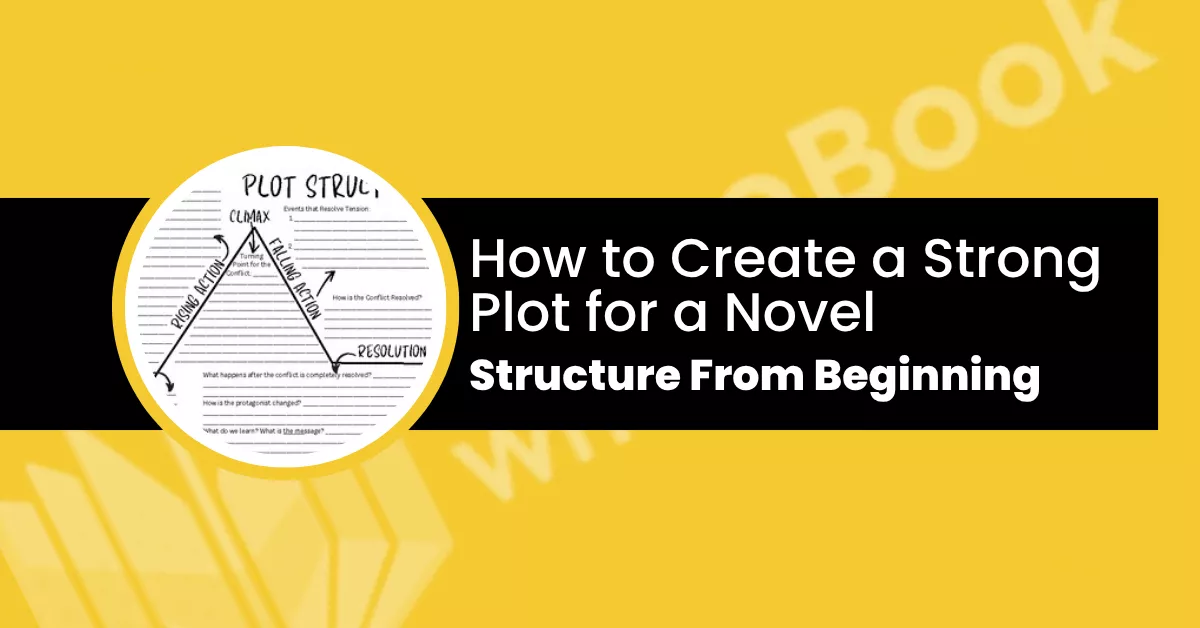
A strong novel plot structure helps horror pacing. The beginning may introduce unease. The inciting incident reveals that something is wrong. The middle escalates fear through strange events, failed explanations, and increasing danger. The midpoint may show that the threat is worse than expected. The final act forces confrontation, escape, survival, or surrender.
Horror pacing often uses a pattern of disturbance, denial, escalation, revelation, and consequence.
The character notices something. They try to explain it away. The problem returns worse. Evidence builds. Other people doubt them. The danger becomes personal. The truth is revealed too late to avoid.
Slow scenes are useful when they build dread, deepen character, or increase tension. Fast scenes are useful when danger finally breaks through. Pacing should make readers feel trapped in the story’s pressure.
Use Dread Instead of Constant Fear
Dread is the feeling that something terrible is coming.
It is one of the most powerful emotions in horror. Fear happens in the moment of danger. Dread happens before danger arrives. It gives readers time to imagine what might happen, and imagination often creates stronger fear than direct description.
You can build dread through warnings, patterns, missing information, strange behavior, repeated symbols, forbidden rooms, unreliable memories, or a threat that grows closer.
For example, a character may receive one photo each morning showing the place they will be standing that night. Nothing violent happens at first. But the pattern creates dread because readers know something is approaching.
Dread is especially effective because it makes ordinary actions feel tense. Opening a door, answering a phone, walking through a hallway, checking on a sleeping child, or looking under a bed can become frightening when the reader expects something. Dread makes readers afraid before anything happens.
Reveal Information Slowly
Horror loses power when everything is explained too early.
Readers do need answers eventually, but mystery helps fear grow. The unknown creates unease. The reader wants to understand the threat, but understanding it too soon can make it feel smaller.
Reveal information in stages. At first, show signs. Then show patterns. Then show consequences. Then reveal part of the truth. Then reveal what the character still does not understand. This keeps the reader engaged while increasing fear.
For example, in a haunted house story, the first sign may be a sound. The second may be a moved object. The third may be a child speaking to someone unseen. The fourth may be a discovery that the same thing happened to a previous family. The final reveal may connect the haunting to the protagonist’s own past.
Information should create new questions before it gives final answers. The reveal should feel earned.
Make the Stakes Personal
Horror becomes stronger when the stakes are clear.
The character may risk death, sanity, family, identity, freedom, faith, memory, reputation, or moral survival. But the stakes should be specific. Readers should understand what the character could lose and why it matters.
A vague threat is weaker than a personal one.
For example, “the town is dangerous” is less powerful than “every family that stays past winter loses its youngest child.” “The ghost is angry” is less specific than “the ghost only appears to people who lied about the fire.”
Personal stakes connect the horror to the character’s life.
A horror novel should not only ask, “Will they survive?” It can also ask, “What will survival cost?” A character may escape physically but lose trust, innocence, identity, or truth. The more personal the stakes, the more powerful the fear.
Use Dialogue to Create Tension
Dialogue in horror should not only explain what is happening.
Strong fiction novel dialogue writing can create fear through denial, contradiction, silence, panic, and subtext. Characters may refuse to believe what they saw. They may hide information. They may speak too calmly when something is wrong. They may repeat a phrase that later becomes terrifying.
For example:
“There’s no basement in this house.”
“Then where did the stairs go?”
This exchange creates fear because it reveals impossible information quickly.
Horror dialogue also works well when characters disagree about reality. One person believes there is danger. Another dismisses it. One character remembers an event differently. Another refuses to speak about it. This creates tension because the reader must question who understands the threat.
Silence can also be frightening. A character who will not answer a simple question may create more fear than a long explanation. In horror, what characters avoid saying can be as important as what they say.
Create Strong Horror Images
Horror often stays with readers through images.
A strong image is specific, unsettling, and connected to the story’s fear. It may be a handprint on the inside of a window, a family portrait with one face scratched out, a hallway that grows longer at night, a doll with wet hair, or a mirror reflecting someone who is not in the room.
The image should not feel random. It should connect to the story’s threat, theme, or emotional wound.
For example, if the horror is about grief, the frightening images may involve preserved rooms, voices of the dead, decaying flowers, or photographs that change. If the horror is about guilt, the images may involve stains, repeated sounds, buried objects, or faces that accuse.
Strong images help build atmosphere and memory. Readers may forget a paragraph of explanation, but they may remember the image that made them uneasy.
Understand Horror Reader Expectations
The genre fiction audience for horror expects fear, suspense, atmosphere, tension, and a meaningful confrontation with danger.
Not every horror novel needs extreme violence. Some horror is quiet, psychological, gothic, supernatural, or slow-burning. But the book should still create unease. It should make readers feel that something is wrong and that the wrongness matters.
Horror readers also expect escalation. The threat should grow stronger, closer, clearer, or more personal. If the story begins with fear but never increases pressure, the book may feel flat.
Readers also expect some form of payoff. This may be a full reveal, a partial reveal, a final confrontation, a disturbing ending, or a lingering question. The ending does not have to make readers comfortable. In horror, discomfort can be the point.
But the ending should feel intentional.
Horror readers are willing to be unsettled.
They do not want to feel misled by weak structure.
Know How Horror Differs From Other Genres
Horror can overlap with fantasy, mystery, thriller, and literary fiction.
Understanding literary fiction vs genre fiction can help you decide how your horror novel should work. A literary horror novel may focus on theme, atmosphere, symbolism, and psychological depth. A genre horror novel may focus more directly on fear, suspense, threat, and survival. Many strong horror novels do both.
Horror can also borrow from mystery novel writing. The character may need to uncover the truth behind a haunting, curse, murder, or town secret. Clues and reveals can strengthen horror when handled carefully.
Horror may also include elements of fantasy novel writing, especially when supernatural rules, dark magic, mythical creatures, or invented worlds are involved. But even supernatural horror needs rules. If anything can happen at any time, fear may become confusion. Horror works best when the reader understands enough to be afraid, but not enough to feel safe.
Use the Monster Carefully
Not every horror story has a monster, but many do.
The monster may be literal or symbolic. It could be a ghost, demon, creature, killer, disease, curse, family member, institution, or part of the protagonist’s mind. What matters is how the monster functions in the story.
A monster becomes scarier when it has rules, behavior, limits, and meaning. If it can appear anywhere, do anything, and be defeated randomly, the story may feel uncontrolled.
Ask:
What does the monster want?
What attracts it?
What stops it?
What does it represent?
How does it change the character’s life?
Why is it frightening beyond appearance?
Sometimes showing less of the monster makes it more powerful. A shadow, sound, smell, footprint, or reaction from another character can create fear before the full reveal.
The monster should not only look scary. It should make the story’s fear unavoidable.
Avoid Common Horror Writing Mistakes
One common mistake is relying only on gore. Graphic scenes can be disturbing, but gore alone does not create lasting fear.
Another mistake is explaining the threat too soon. Mystery and uncertainty help horror grow. Reveal information carefully.
Some writers create characters who make unbelievable choices just to keep the plot moving. Readers may accept fear, panic, or denial, but choices should still fit the character.
Another mistake is using random scary images that do not connect to the story. Horror details should support atmosphere, theme, or threat.
Some writers also forget emotional stakes. A monster is less frightening if readers do not care who it hurts.
A final mistake is ending without payoff. Ambiguity can work, but it should feel intentional, not unfinished. Horror needs control. Chaos on the page should still come from careful design.
Plan the Ending Early
A horror ending should leave an impact.
It may end with survival, death, escape, possession, truth, sacrifice, madness, or an unsettling final image. It may close the main conflict or leave a lingering sense of danger. The right ending depends on the type of horror you are writing.
Plan the ending early enough to build toward it.
If the ending reveals a family secret, plant emotional clues. If the monster has a weakness, establish rules. If the protagonist must make a sacrifice, build that choice through character development. If the ending is bleak, make sure the bleakness feels earned.
Horror endings do not always need comfort.
But they do need meaning.
The final pages should make readers feel the story’s fear in a lasting way.
Final Thoughts
Horror fiction book writing works best when fear is built with care.
A frightening idea is only the beginning. A strong horror novel needs vulnerable characters, personal stakes, unsettling atmosphere, controlled pacing, meaningful setting, sharp dialogue, and carefully timed reveals. It should create dread before shock and make readers feel that danger is closing in. Horror does not have to explain everything. But it must make readers feel something.
For authors, the goal is not only to scare readers for a moment. The goal is to create fear that stays with them after the book is closed. When horror is written well, it does more than disturb. It reveals what people are most afraid to face.
Benjamin Lucas is a professional content strategist and publishing writer with expertise in digital content creation, eBook development, and online branding. He regularly writes about publishing trends, business communication, technology, and content marketing, helping readers understand the evolving digital landscape. Through his work with Hire Ebook Writer Now , Benjamin focuses on creating engaging, informative, and professionally crafted content that supports both businesses and aspiring authors.