
Language gets powerful when it borrows from the body. Writers have always leaned on physical movement to describe emotional change, turning inward, breaking outward, collapsing, reaching, twisting, resisting. That’s why medically grounded terms like inversion vs eversion show up more often than you might expect in poetry, essays, and even brand storytelling.
But there’s a catch. When technical words are used loosely or incorrectly, the metaphor collapses. The image stops making sense. The reader stumbles.
If you’re going to use precise anatomical terms in creative or professional writing, you need to understand what they actually mean and how far they can stretch without snapping. This is especially important when working with professional Poetry Writing Services, where accuracy and artistry have to coexist.
Let’s start with the literal definitions, then explore how these movements work metaphorically, and finally look at why precision matters so much in modern writing.
What Inversion and Eversion Mean in Medical Contexts
In anatomy and kinesiology, inversion and eversion describe specific movements of the foot and ankle.
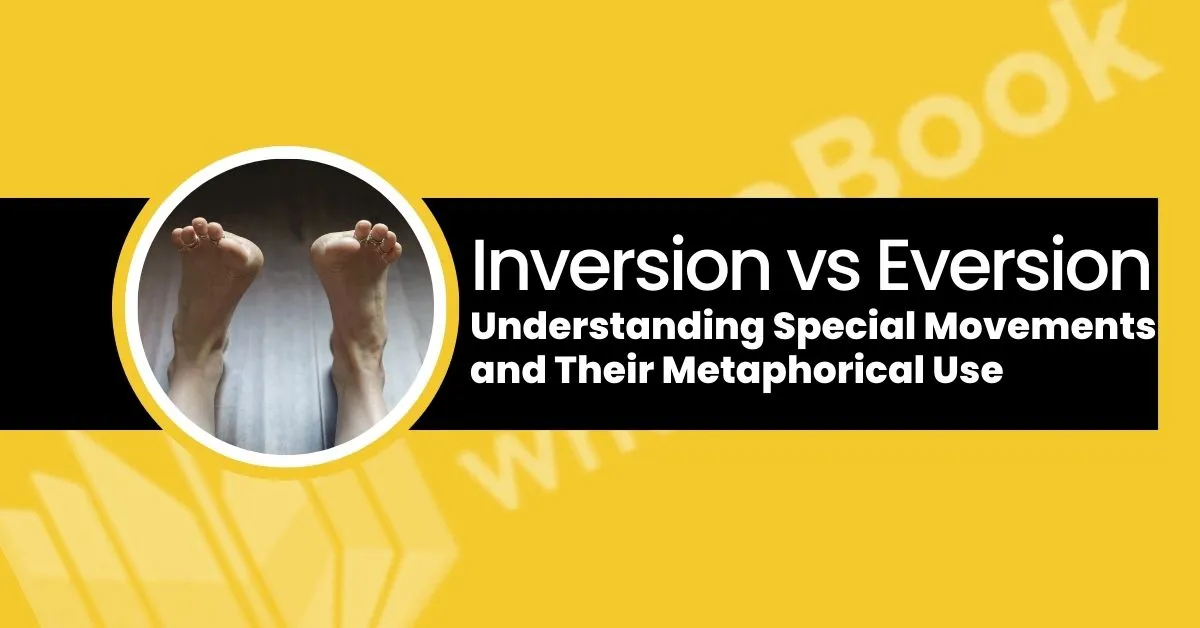
Inversion occurs when the sole of the foot turns inward, toward the midline of the body. Picture the foot rolling so that the inner edge lifts slightly and the sole angles toward the other foot.
Eversion is the opposite movement. It happens when the sole of the foot turns outward, away from the body’s midline, lifting the outer edge of the foot.
These terms are not interchangeable. In medical settings, using the wrong one can cause real confusion, especially in physical therapy, sports medicine, or injury diagnosis. An ankle sprain caused by excessive inversion is very different from one caused by eversion.
That clarity is exactly why writers are drawn to these words. They don’t just imply movement; they imply direction, intention, and consequence.
How Inversion and Eversion Work as Metaphors
When writers borrow inversion vs eversion for metaphorical use, they’re usually talking about psychological or emotional motion.
Inversion often suggests withdrawal. Turning inward. Folding into oneself. It can represent introspection, isolation, self-protection, or emotional collapse. A character who inverts may be retreating from the world, guarding themselves, or processing something privately.
Eversion, on the other hand, suggests exposure. Turning outward. Opening up. It can represent vulnerability, expression, confrontation, or release. A character who everts is no longer holding things inside. They’re letting something be seen.
Used correctly, these metaphors feel physical. They carry weight. Used incorrectly, they confuse the reader because the direction of movement no longer matches the emotional intent.
This is the same problem writers face when confusing comprise vs constitute. One describes the whole containing parts; the other describes parts forming a whole. Swap them, and the logic breaks. Metaphor works the same way. Direction matters.
Precision Is Not Optional in Creative Writing
Some writers believe creative freedom means accuracy doesn’t matter. That’s a myth.
Creative writing gives you freedom of expression, not freedom from meaning. Words still have definitions, histories, and associations. When those are ignored, the reader feels it, even if they can’t explain why.
This is especially true when using specialized language. Medical terms, legal language, or scientific concepts carry authority. If you misuse them, the authority disappears.
Think about how often writers trip over distinctions like between vs among or struggle with reflexive forms like yourself vs self vs myself. These aren’t pedantic details. They shape clarity. They shape trust.
The same goes for technical metaphors. If inversion implies inward motion and eversion implies outward motion, your emotional metaphor must follow that same logic. Otherwise, the image collapses.
Inversion and Eversion in Poetry and Education
Poetry is one of the most common places these terms appear metaphorically. Poets often describe grief as a physical turning inward or healing as an outward unfolding. When done well, these metaphors feel embodied rather than abstract.
This is why precision is especially important in poetry writing for educational projects. When poetry is used to teach anatomy, psychology, or emotional literacy, incorrect metaphors don’t just weaken the poem. They teach the wrong thing.
The same applies to commissioned work, like seasonal poems for holidays or gift poems for friends and family. These poems often aim to capture emotional shifts, loss, gratitude, renewal, and reconnection. Borrowing physical language can deepen that impact, but only if the language is accurate.
Professional poets understand this balance. They know when to lean on technical accuracy and when to simplify without distorting meaning. That’s a major reason people turn to Poetry Writing Services instead of relying on improvised or AI-generated verse.
Metaphor, Marketing, and Message Control
In branding and marketing, metaphor has to work even harder. It’s not just about beauty; it’s about clarity and alignment.
When choosing a poetry style for marketing, brands often use bodily metaphors to describe transformation. A company might talk about turning inward to reassess values or turning outward to engage customers. Inversion and eversion can support those ideas, but only if used intentionally.
This is where misuse becomes dangerous. A brand that confuses inward reflection with outward expansion risks muddying its message. That’s similar to confusing its vs it’s difference in a headline. One small error can undermine credibility.
Precise metaphor helps marketing poetry feel intelligent, not ornamental. It helps readers feel guided rather than manipulated. And that’s why professional oversight matters so much in commercial or public-facing poetry.
Precision Across Writing Contexts
The need for accuracy doesn’t stop with poetry. It carries across genres and formats.
If you’re working on romance writing prompts, for example, and you describe a character emotionally “everting into silence,” the image doesn’t work. Silence is inward. The correct metaphor would be inversion. These subtle choices shape how readers visualize emotion.
The same applies if you’re preparing work for romance writing competitions and awards. Judges notice language control. They notice whether metaphors are intentional or sloppy. Precision signals craft.
Even in practical guides like how to self-publish a romance ebook, language clarity matters. If you can’t handle basic distinctions like data vs datum vs facts, readers will question your authority elsewhere, too. Precision builds credibility across the board.
Inversion, Eversion, and Narrative Arcs
Metaphors don’t exist in isolation. They interact with story structure.
In longer narratives, inversion and eversion can mirror character arcs. A protagonist may begin by inverting, pulling away from the world after loss or failure. Over time, the story may guide them toward eversion, reconnection, expression, and risk.
This kind of language becomes especially useful when turning your romance story into a series. Physical metaphors can subtly reinforce long-term emotional growth across multiple books, helping readers feel continuity without overt explanation.
Even in forward-looking publishing strategies, such as planning new year romance releases for 2026, writers who control metaphor can create thematic cohesion across releases. The language evolves alongside the characters.
Environmental and Ethical Dimensions of Language
There’s also a growing awareness of how language choices reflect broader values. Writers discussing sustainability, for example, often connect inward and outward motion to consumption and responsibility.
In that context, metaphors tied to physical movement show up in conversations about the environmental benefits that ebooks offer compared to print. Turning inward might symbolize reduced waste or conscious consumption. Turning outward might symbolize advocacy or awareness.
Again, a metaphor only works when it’s grounded. Precision gives your message ethical weight. Sloppiness undermines it.
Why Professional Guidance Still Matters
With so many tools available today, it’s tempting to assume accuracy will take care of itself. Spellcheck exists. Grammar tools exist. Even AI can generate metaphors on demand.
But tools don’t understand intention. They don’t understand metaphorical direction. They don’t understand when technical accuracy matters more than surface fluency.
That’s why writers still rely on professional editors and Poetry Writing Services. Human expertise catches the moments where a word technically “works” but conceptually fails. It ensures metaphors reinforce meaning instead of weakening it.
Precision isn’t about being rigid. It’s about being responsible with language.
Final Note
Inversion vs eversion is more than a medical distinction. It’s a reminder that words move. They point inward or outward. They carry direction, implication, and consequence. When you use these terms metaphorically, you’re inviting the reader to feel motion in their own body. That invitation only works if the movement makes sense.
Whether you’re writing poetry, educational content, marketing copy, or fiction, precise language isn’t a constraint. It’s a foundation. And when that foundation is solid, your metaphors don’t just sound smart, they land. If you want your writing to move readers without tripping them, accuracy is where the movement begins.